MSU Libraries Mobile App
Award-winning Capstone Project

Duration: Sep 2025 - Apr 2026
Skills: User Research, Client Cooperation, Wireframing, Prototyping, Usability Testing, Qualtrics
A project redesigning how MSU students access library resources on mobile. Through user research and iterative design, we built a full high-fidelity prototype that brought essential library features to students' smartphones, validated through usability testing.
Timeline:
UX Research
UX Design
Evaluation
Final Product
Problem?
MSU Libraries supports students, faculty, staff, and the Lansing community, but when users step away from a desktop, access to key resources breaks down. Without a reliable mobile experience, people miss updates, struggle to find information, and can't manage their checkouts on the go. That gap is what we set out to solve.
Research Questions
What difficulties and successes do users encounter when using the web application on their mobile devices?
What features are most important and most useful to the multiple user groups that currently use the MSU Libraries?
What features would users find useful on a mobile device when engaging with the library system while in person or remotely?
What design patterns or features from comparators’ apps should be adapted or avoided?
Desk Research

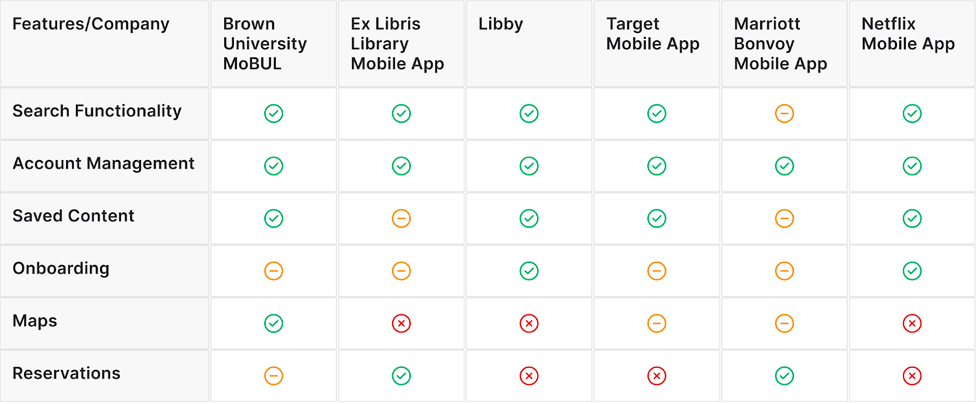
3 direct comparators - Brown University MoBUL, Ex Libris Library Mobile App, Libby
3 indirect comparators - Target Mobile App, Marriott Bonvoy Mobile App, Netflix Mobile App
Findings-
Our analysis of three comparator apps: Brown University’s moBUL, Ex Libris platform, and Libby highlight key takeaways for our project. moBUL provides features like specific course reservations, and “scan a shelf,” setting a high bar for custom. Campus-specific utility. The Ex Libris platform has very standardized functions: bookings, accounts, and search but often lacks distinctive branding. Libby offers a very user-centered design with its intuitive interface and engaging presentation of digital content.
Analysis-
Screening Survey

Current Library Use:
52% use library resources daily or multiple times per week
85% have used the MSU Libraries website before 
Findings-
Primary reasons for library use included:
71% Accessing online articles and databases
46% Finding a quiet place to study
47% Borrowing physical materials
39% Using printers, computers, or scanners 
Interest in Mobile App Features:
63% Searching the library catalog from a phone
47% Viewing checked-out items and due dates
44% Managing accounts and renewing books
48% Viewing library hours and location details
56% Booking or reserving rooms
Device and Platform Preferences:
96% Respondents primarily use a laptop or desktop
57% Also use a smartphone, despite the website not being optimized for mobile use
Analysis-
The survey results suggest that students are primarily engaging with MSU Libraries in ways that are often tied directly to coursework or other academic needs. Based on the responses, the library is frequently used as a study space and research resource; however, some awareness of the additional services (such as events) appeared limited. The team noted this as a potential gap between what the library offers and what users are actively recognizing and or accessing.
Using the results of the survey the team created an interview guide with the goal of better understanding how students discover the library’s services, what things may be preventing or challenging engagement, and which interactions would be most valuable to support through a mobile experience.
User Interviews & Affinity Map

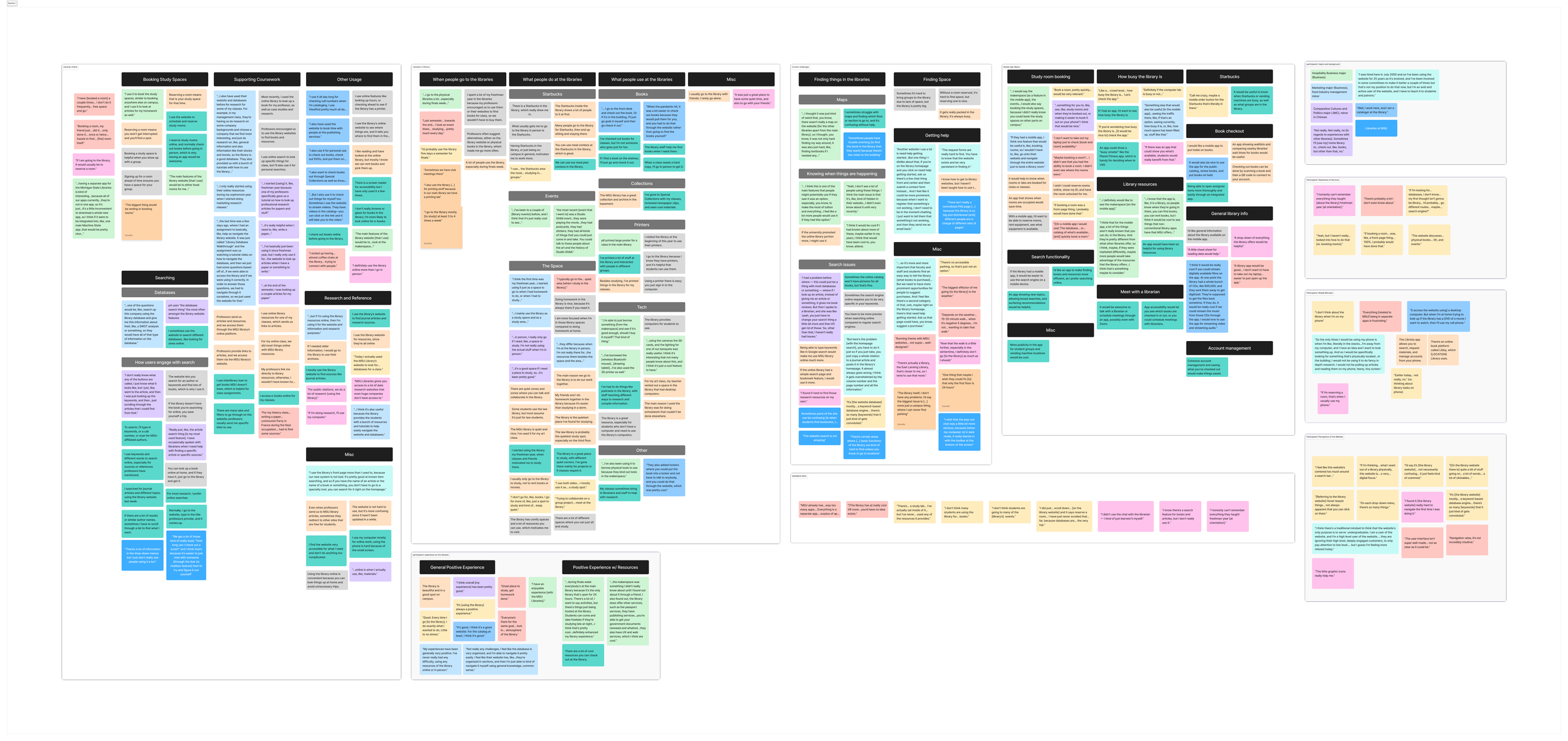
From the affinity maps, the team was able to code the gathered quotes into current usage patterns, issues and concerns, and wishes for a mobile application.
Findings-
Search Functionality: High Priority

8/14 Participants actively use the website for searching for reference materials.

8/14 Participants currently have issues with the search functionality on the website.
Room Booking: High Priority

5/14 Participants actively use the website for booking study rooms.

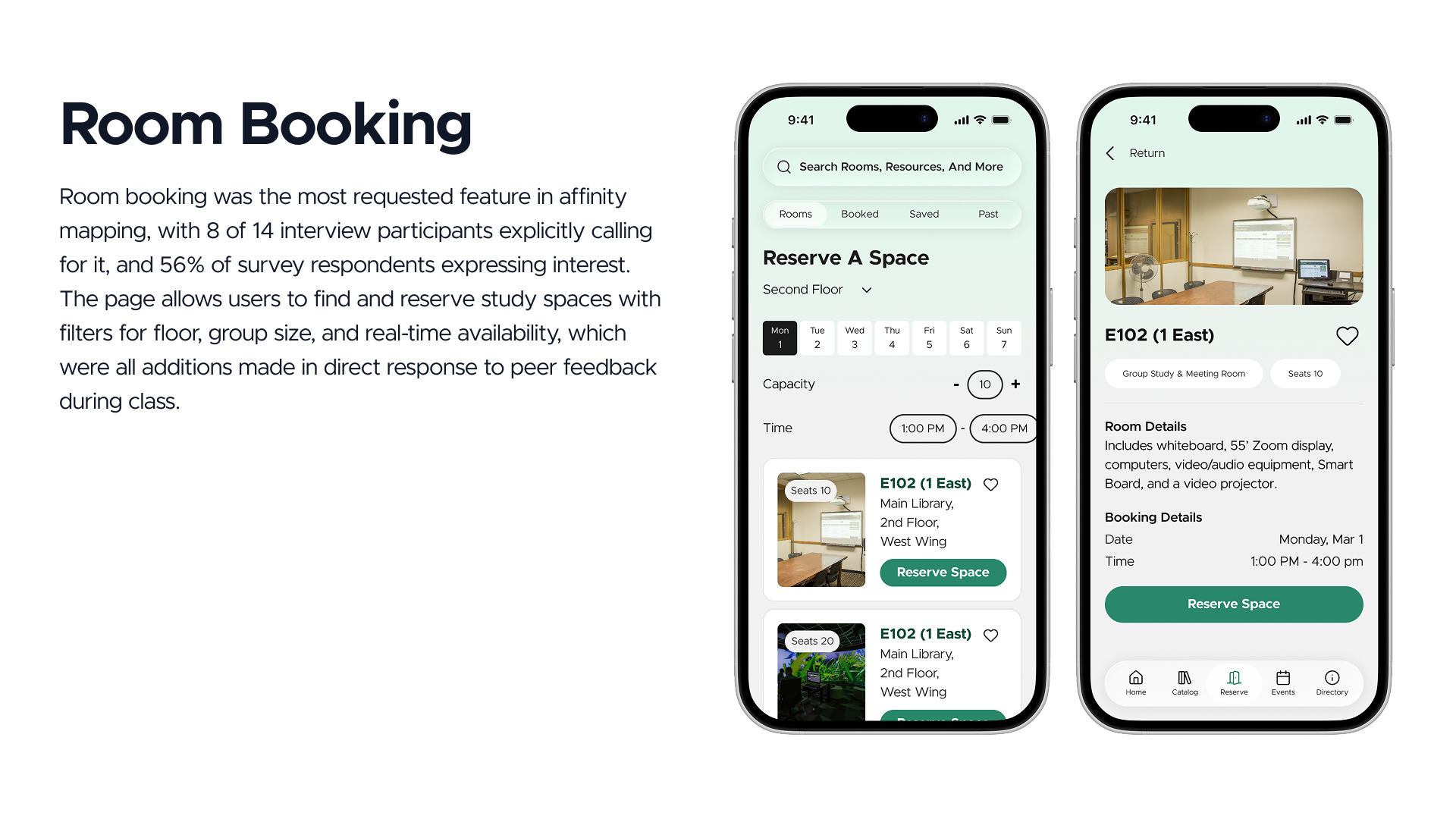
8/14 Participants would like to see a room booking feature on a mobile app.

2/14 Participants mentioned wanting a search feature on a mobile app.
Physical Space Usage: Medium Priority

8/14 Participants actively use the physical library location for studying.
2/14 Participants state they have issues finding space in the library.

4/14 Participants would like to see how busy the library is within a mobile app.
Awareness of Services & Events: High Priority

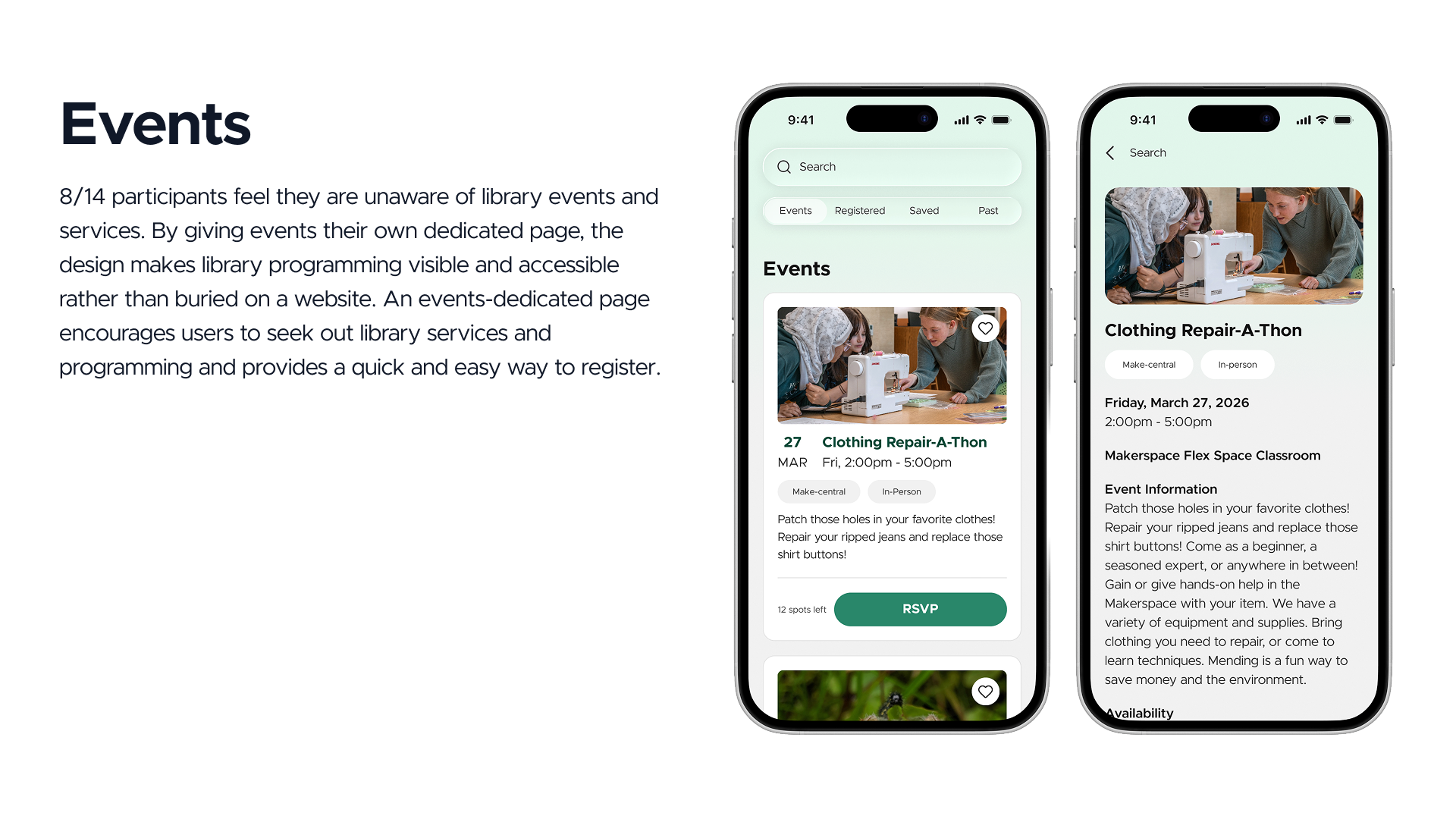
8/14 Participants feel they are unaware of library events and services.

6/14 Participants feel they would benefit from knowing more general library information & resources on a mobile app.
Item Checkout and Account Status: Medium Priority

6/14 Participants would like to see how busy the library is within a mobile app.

3/14 participants would like a mobile app to put holds on items and check account status.
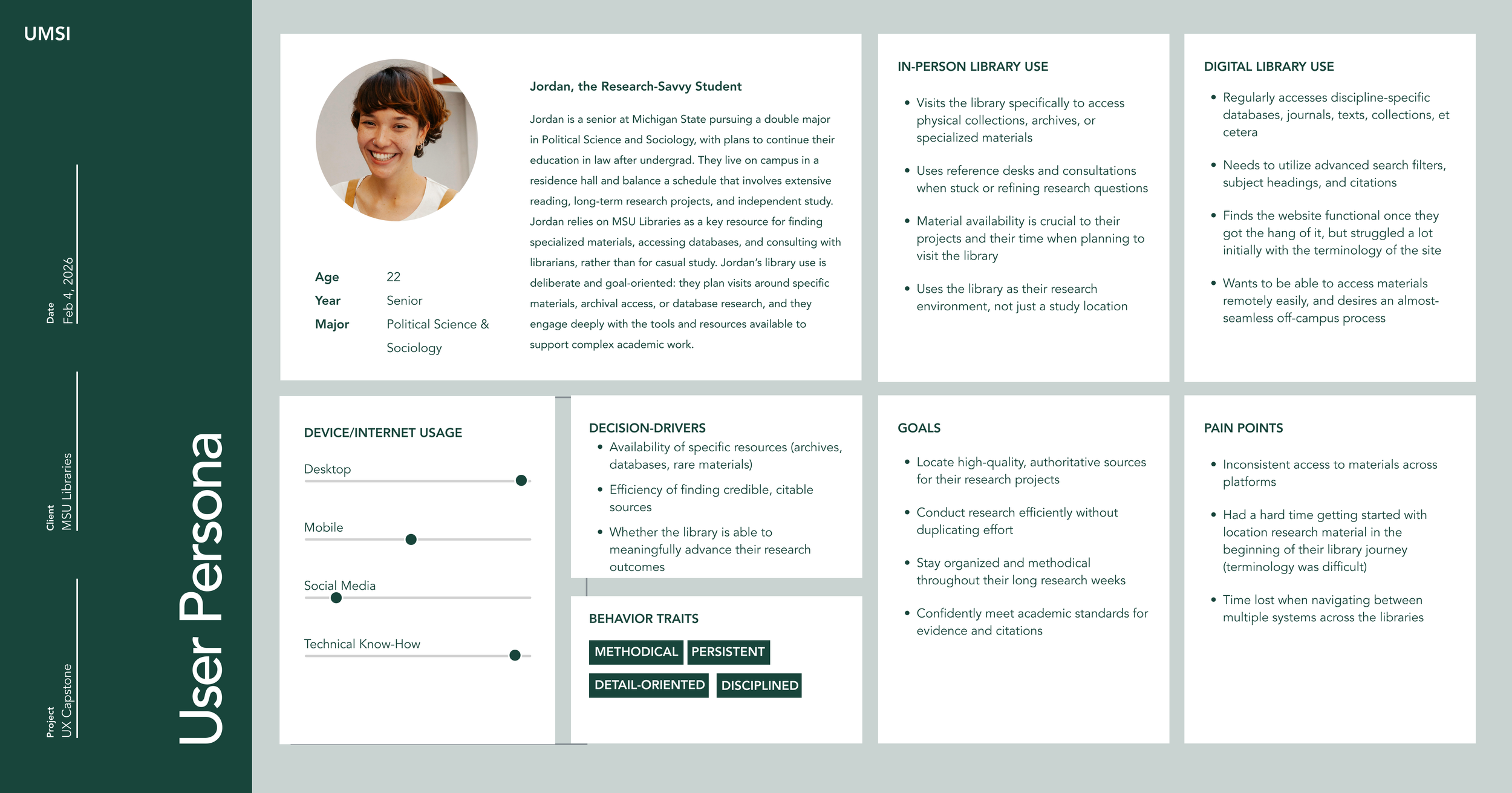
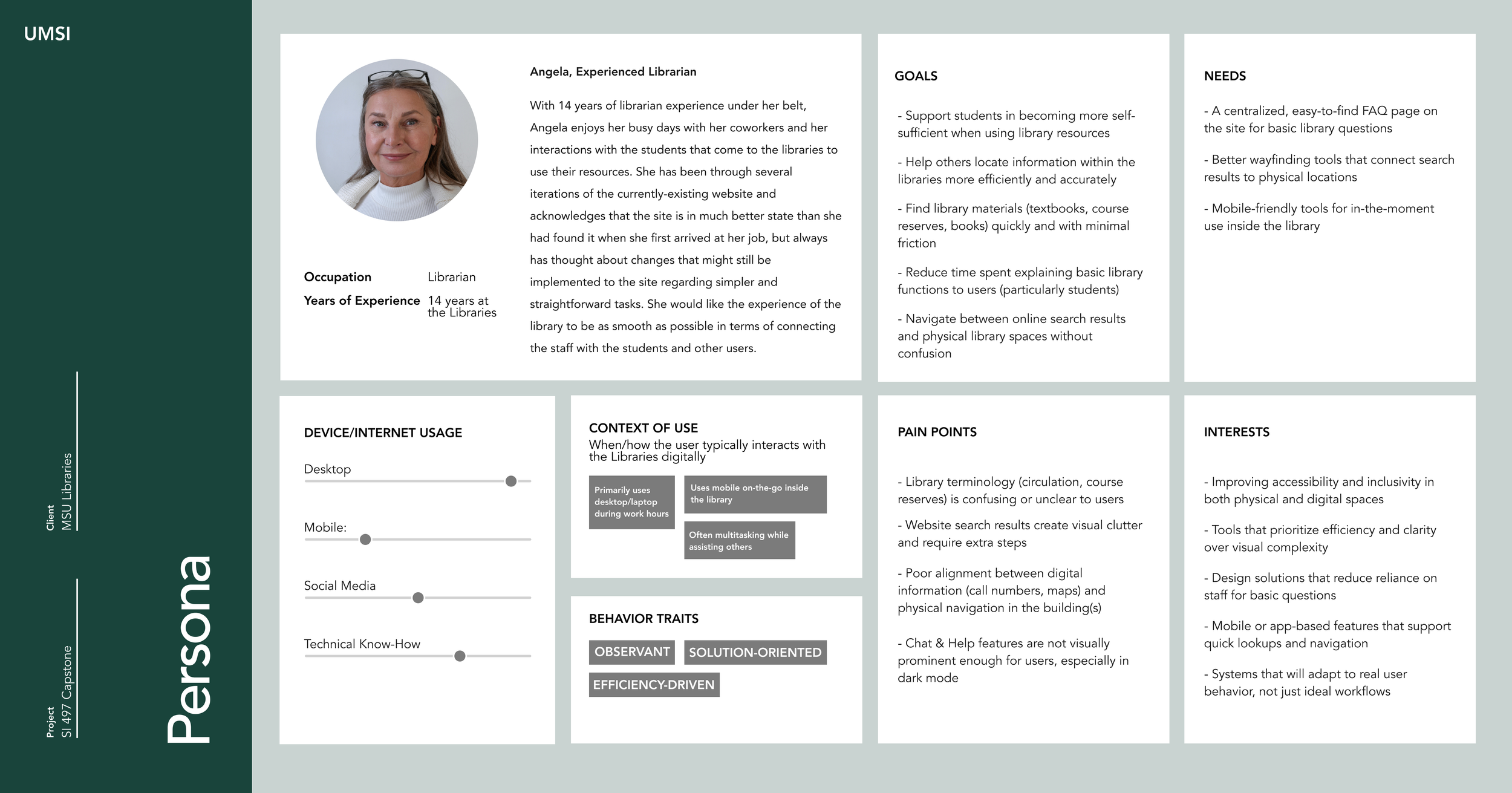
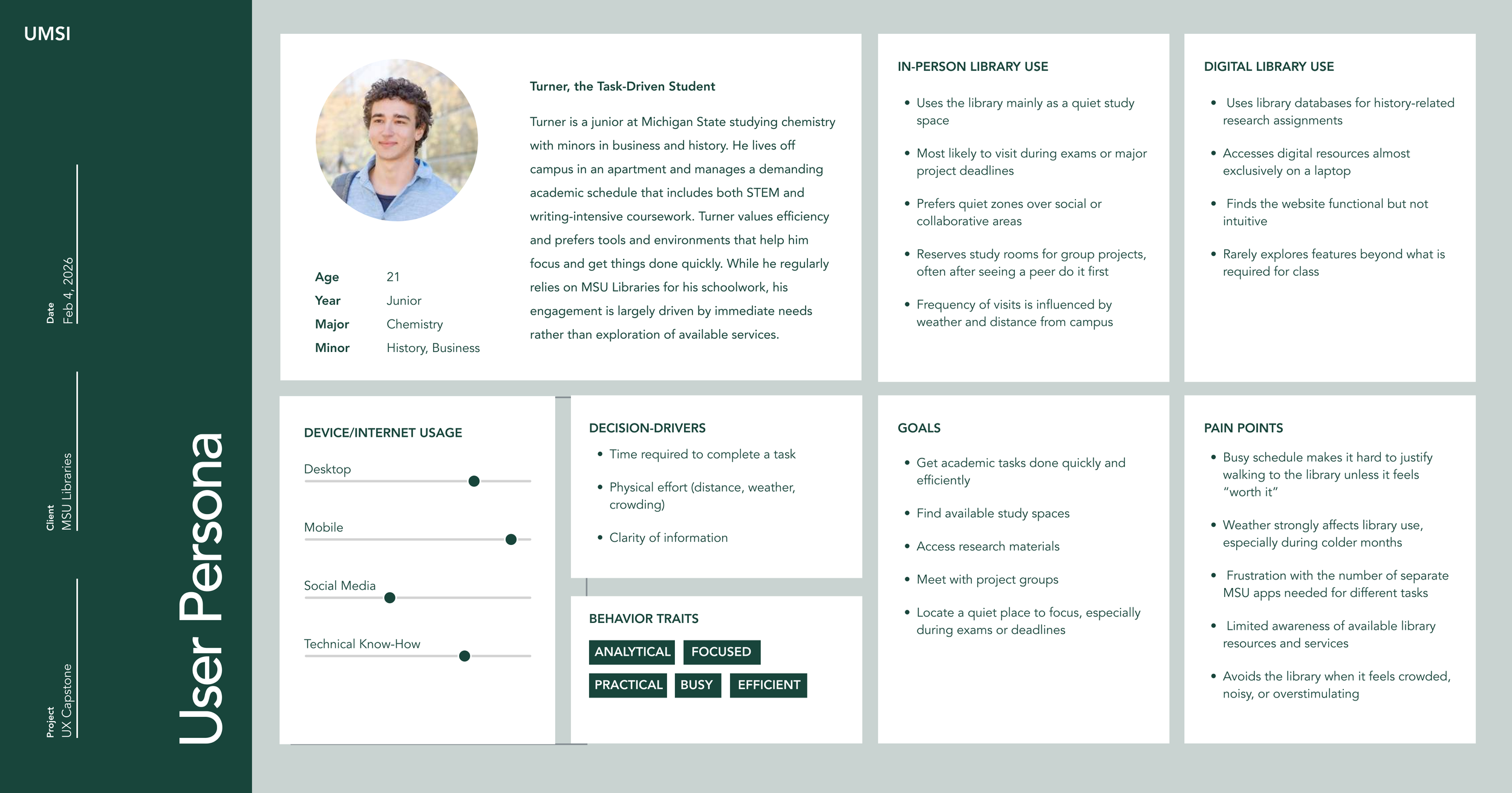
User Personas
Design Requirements
Our design process was directly informed by the research phase. The requirements we established drove every structural and interaction decision in the app. We moved through four stages: sketching, low-fidelity wireframing, high-fidelity design, and interactive prototyping, with continuous iteration based on peer and client feedback at each stage.
Features Supporting Online Usage-
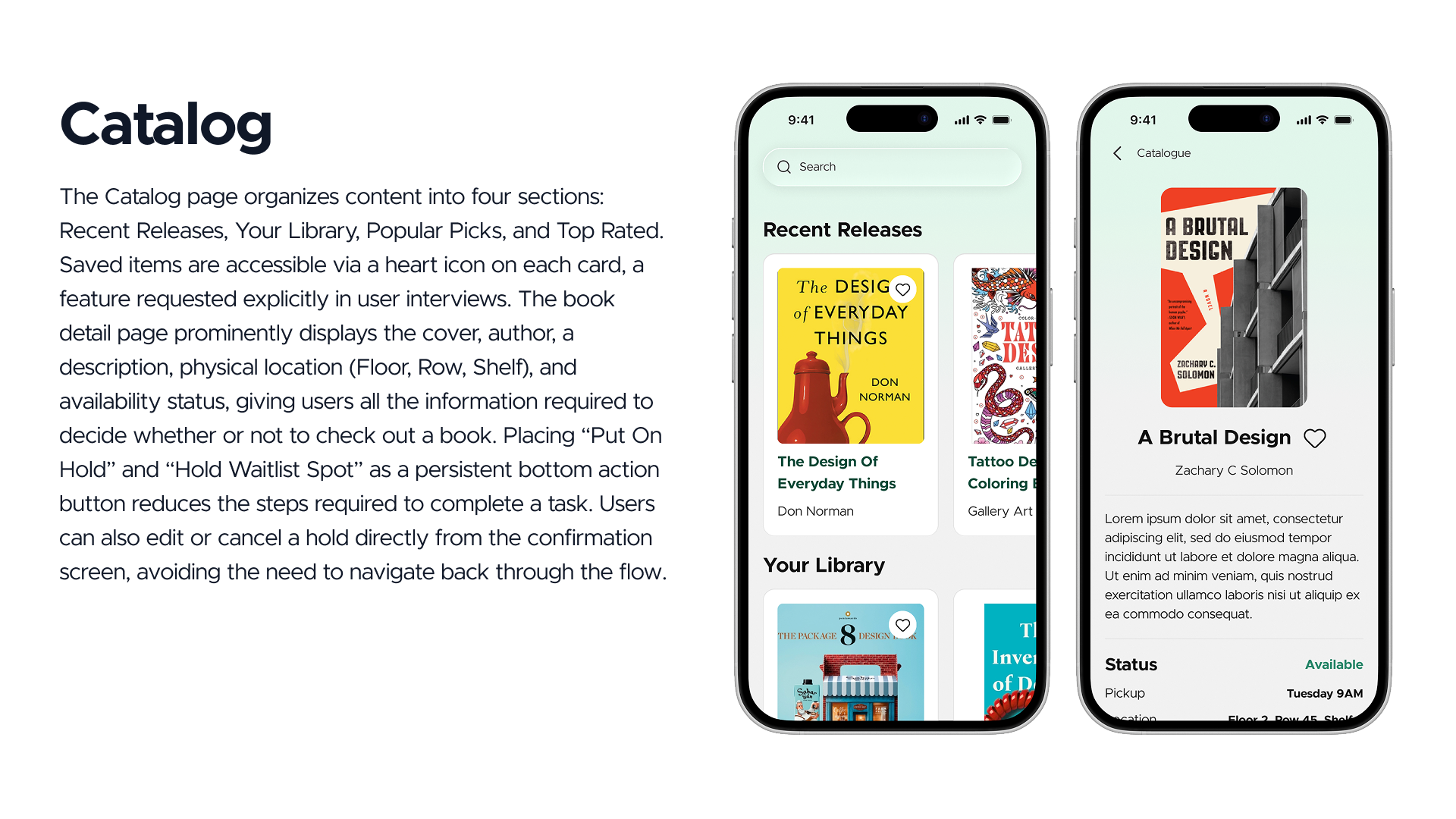
Users want to search the library catalog from their phone, with filters, save-for-later, and content previews.
Rationale:5 of 6 comparators offer search; 63% of survey respondents prioritized it; 8 of 14 interview participants use the library website for search.
Search Functionality:
Features Supporting In-Person Usage-
Reserving Physical Spaces:
Users want to find and book study rooms from their phone, with filters for floor, group size, and real-time availability.
Rationale: 56% of survey respondents want room booking; 8 of 14 interview participants called it their top desired feature.
Account Status & Checkout Management:
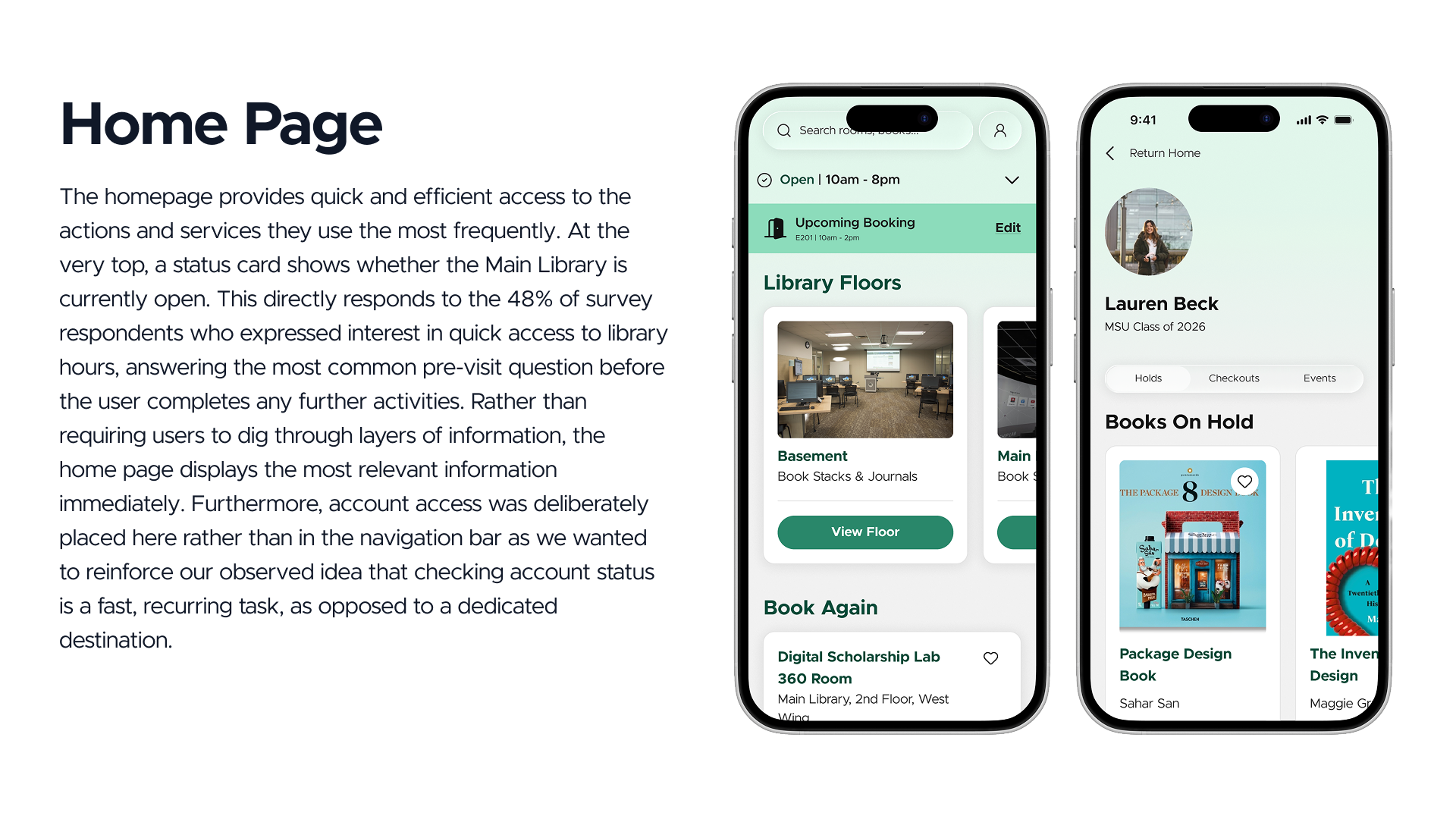
Users want to view checked-out items, manage holds, and renew books from a mobile device.
Rationale: All 6 comparators offer account management; 47% of survey respondents borrow physical materials; 3 of 14 interview participants specifically requested this feature.
Accessing Library Information:
Users want to know library hours, what's available on each floor, and what events are happening, all from their phone.
Rationale: 48% of survey respondents want quick access to hours; 8 of 14 interview participants feel unaware of library events and services.
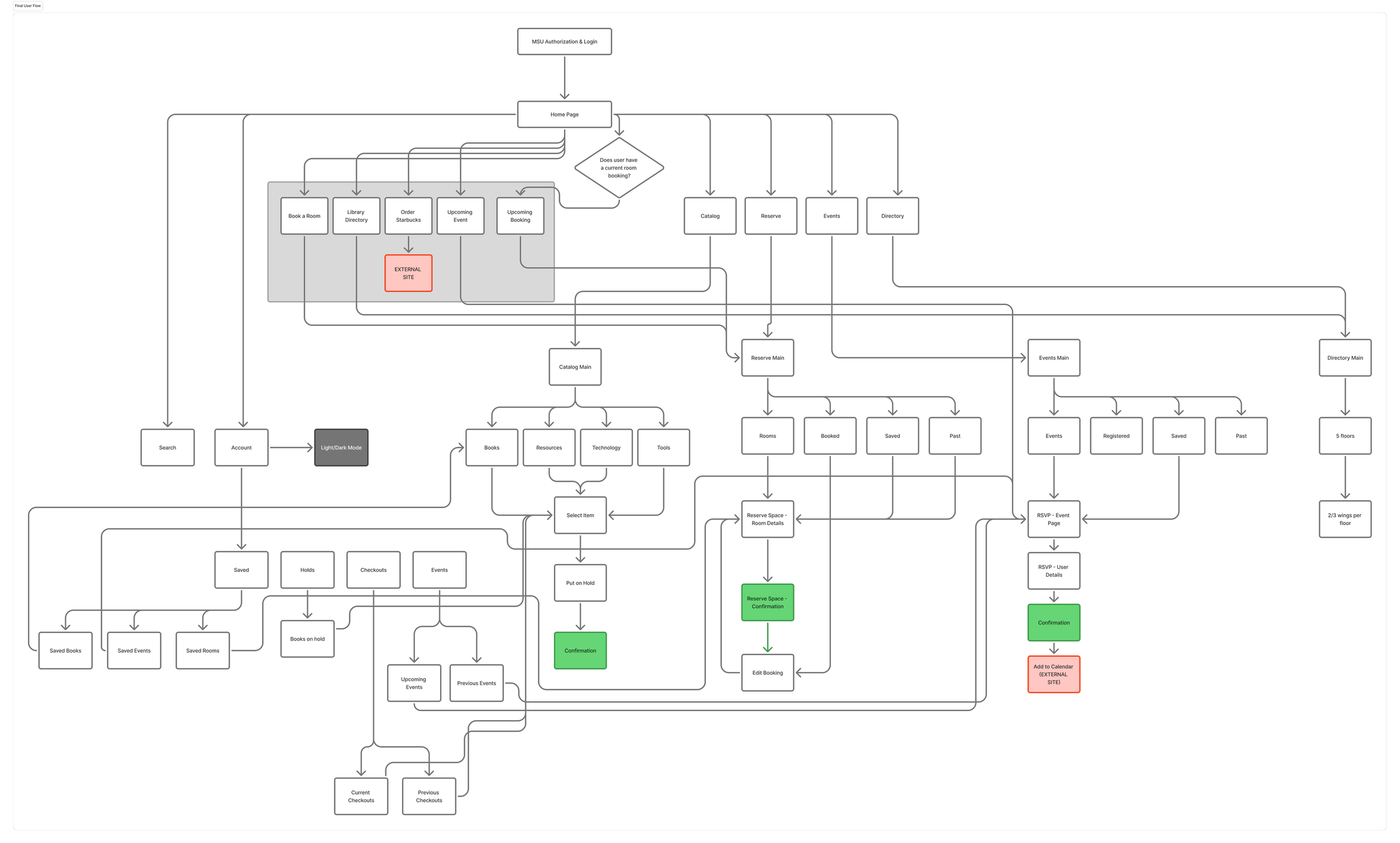
User Site Map
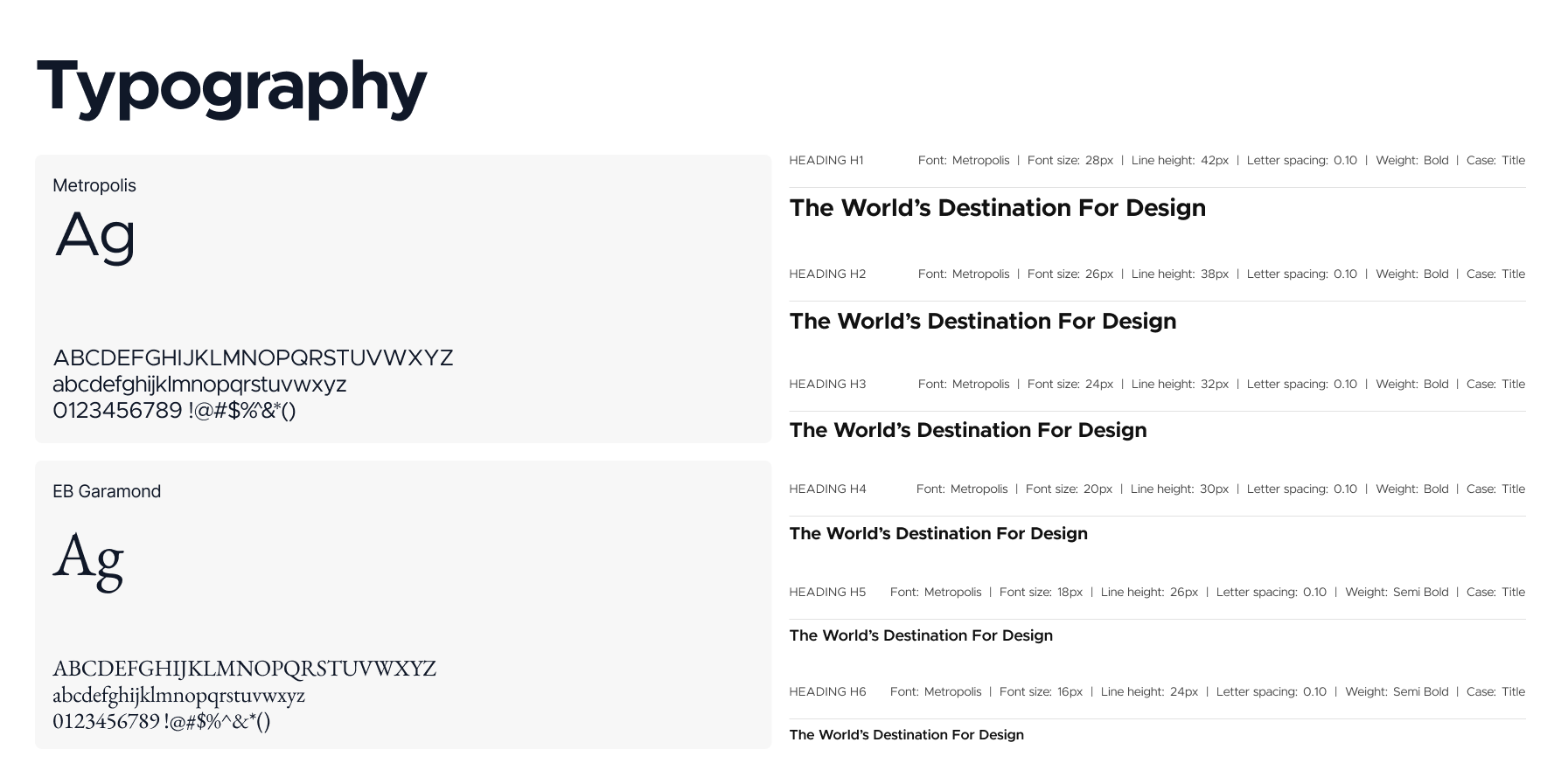
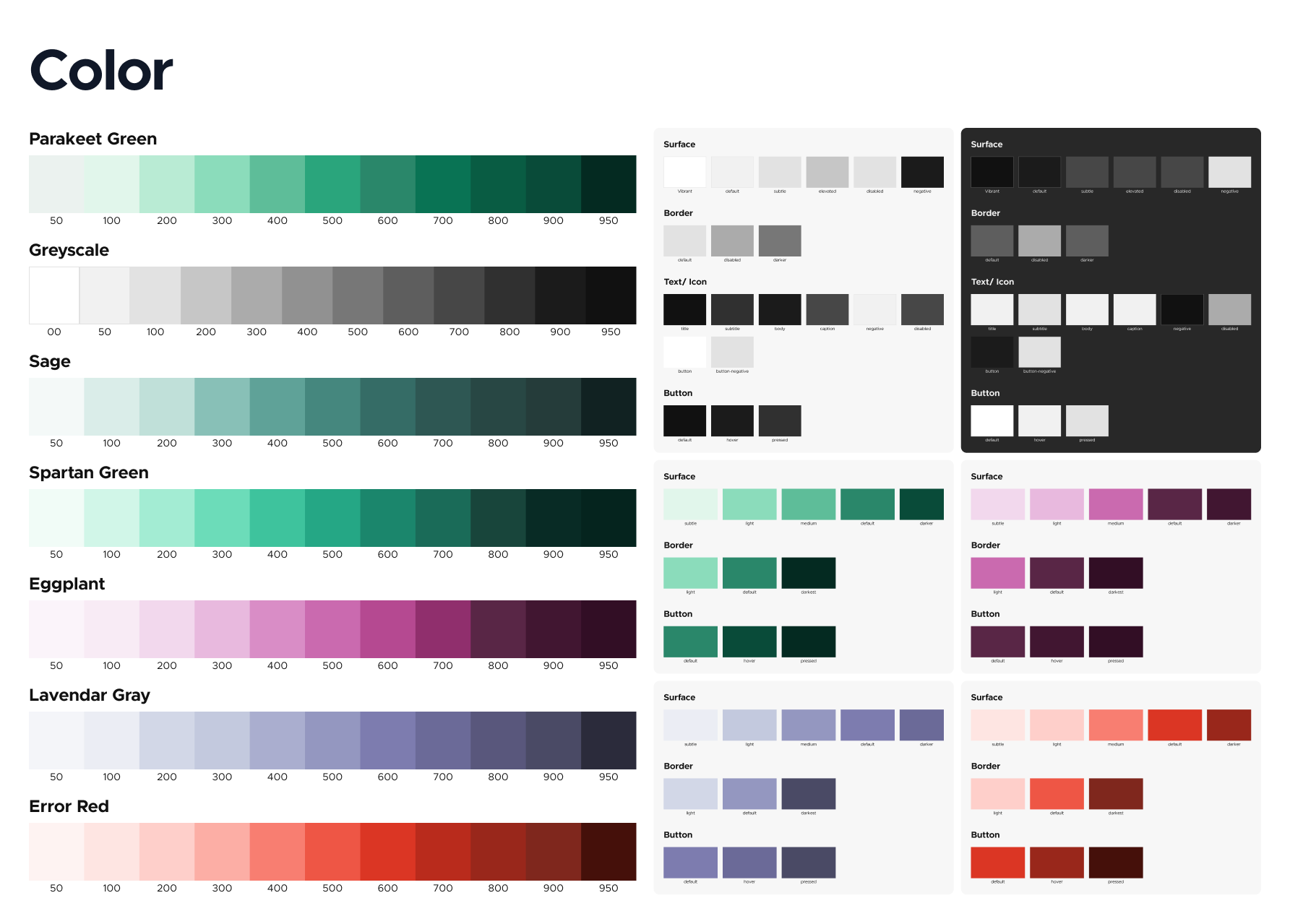
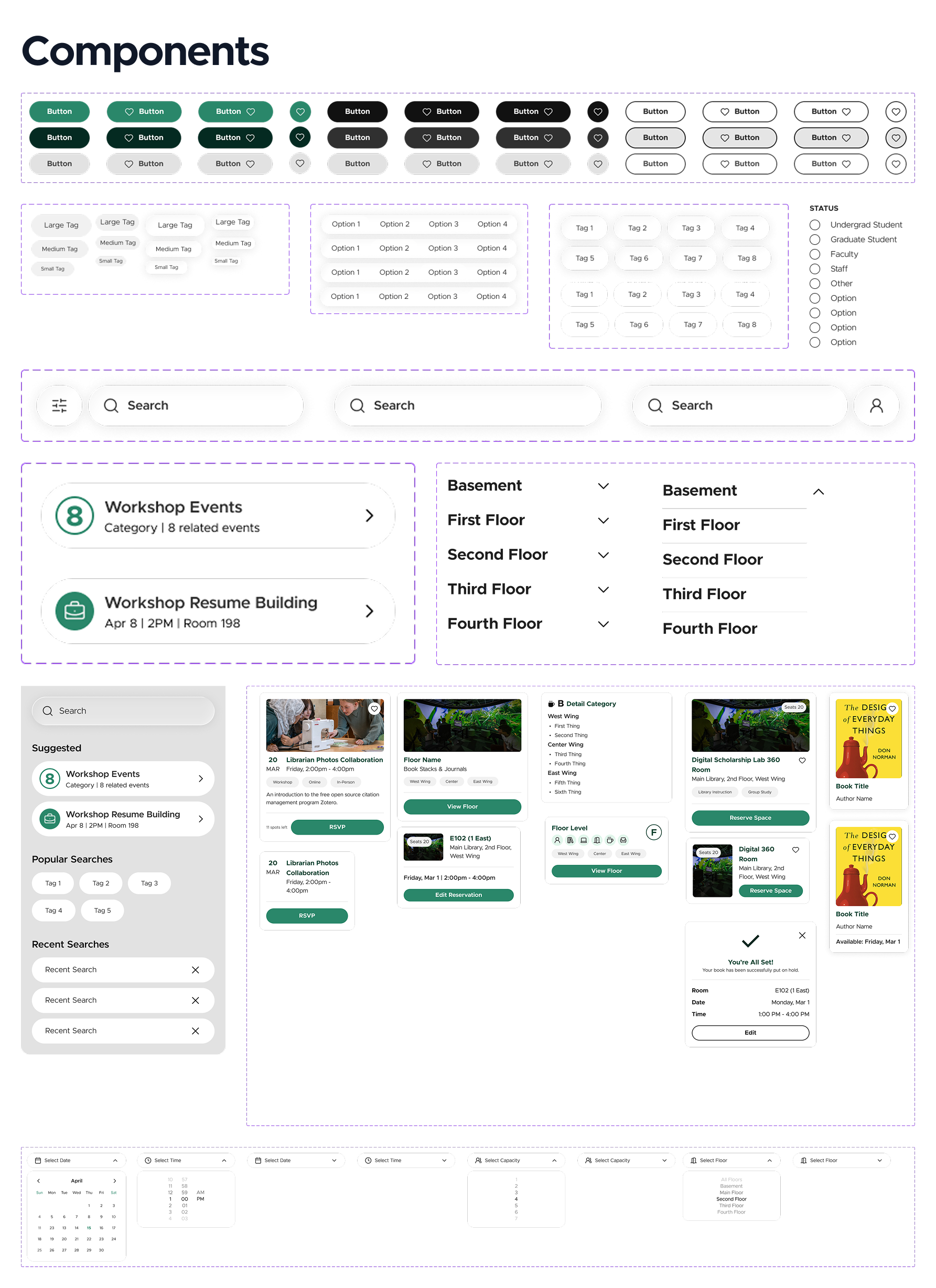
Design System
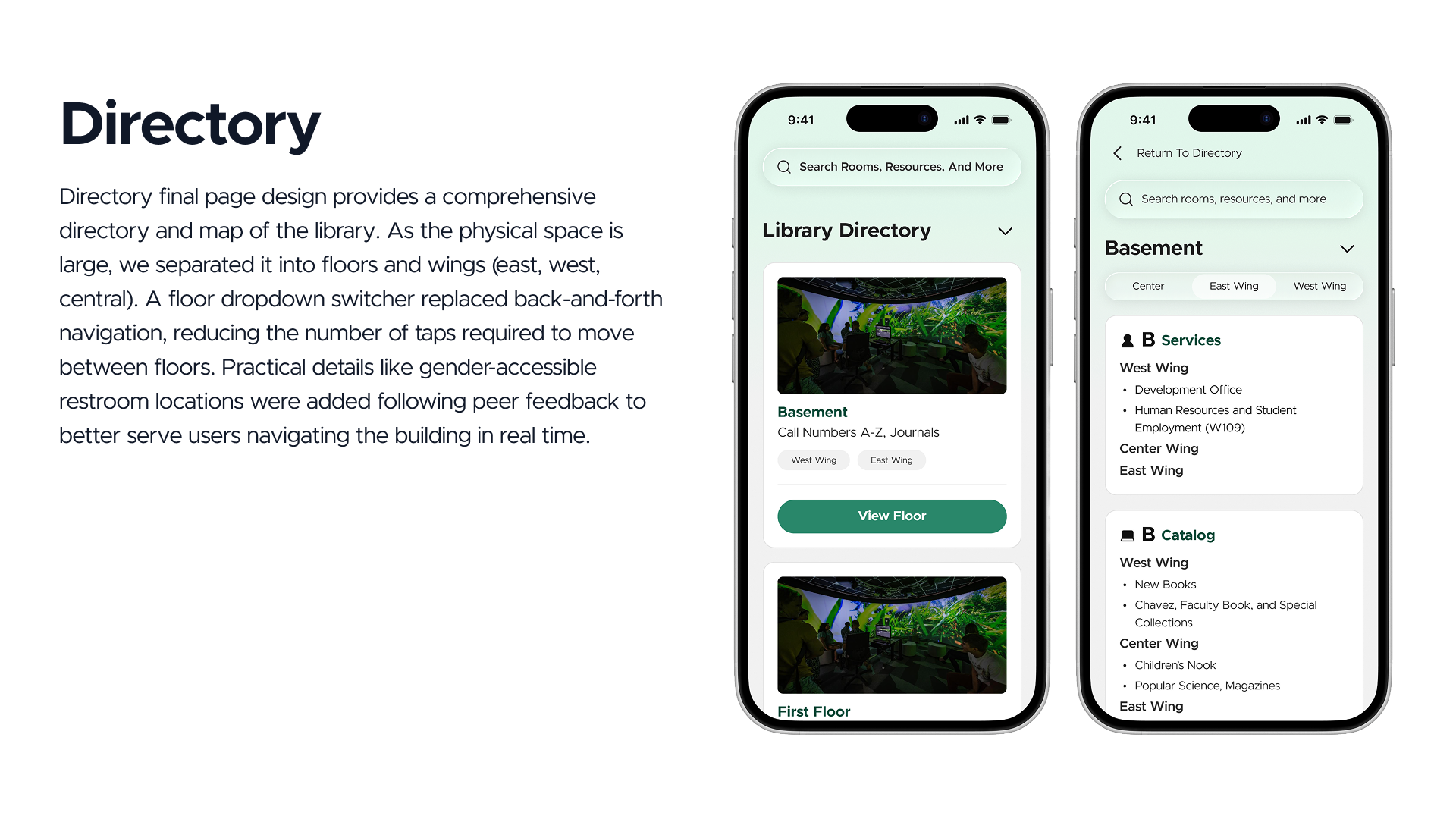
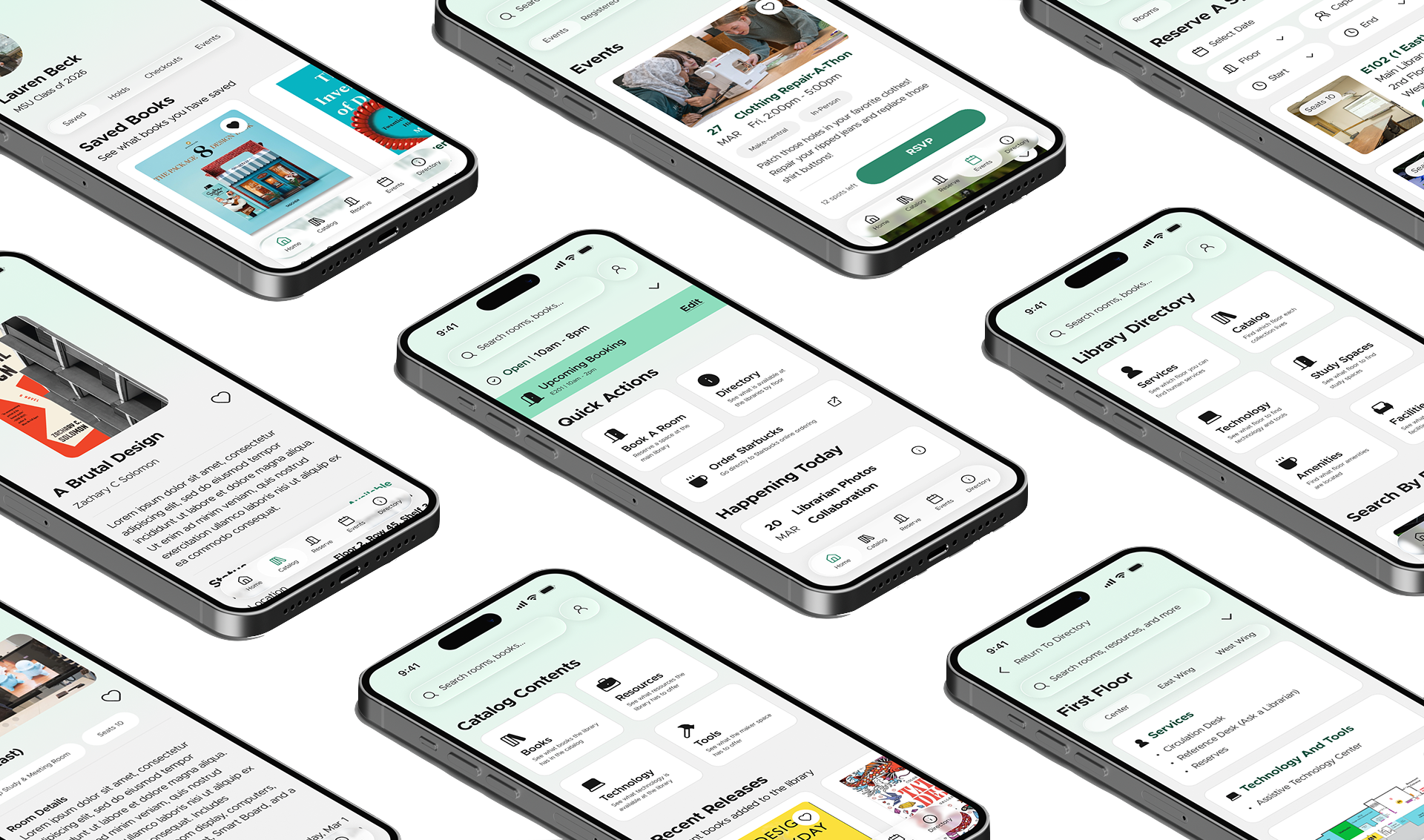
Final Designs